

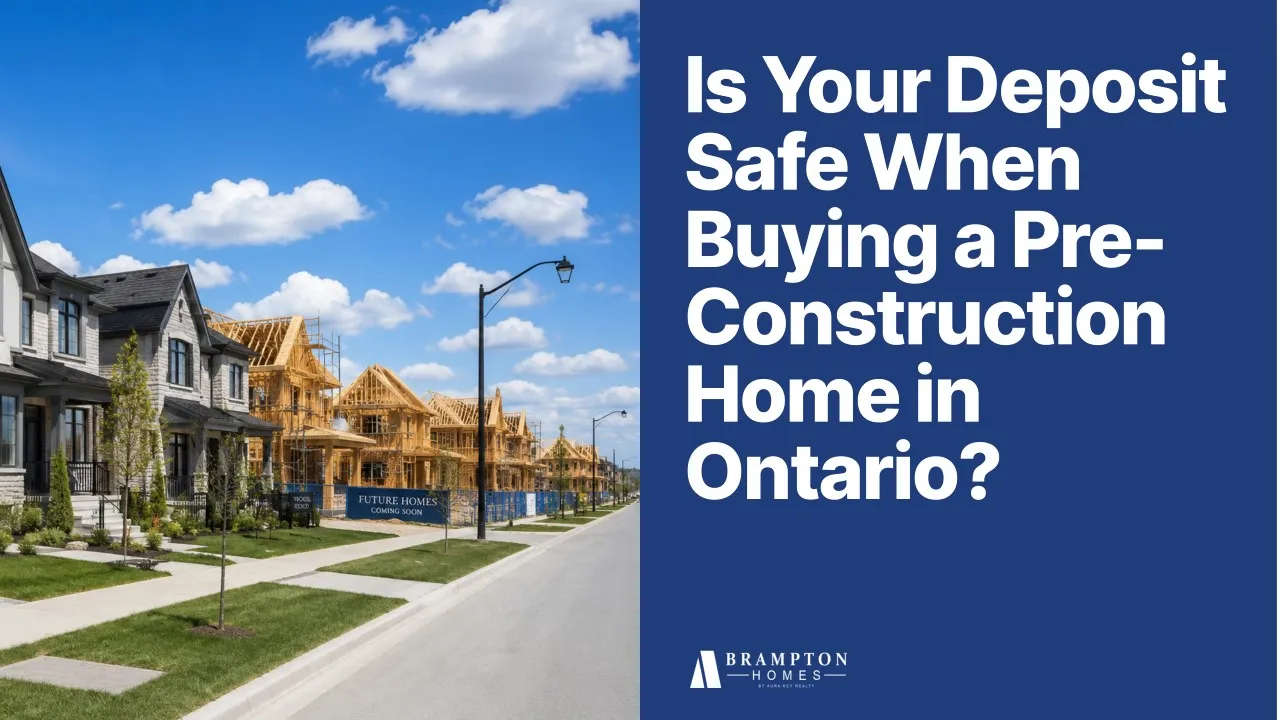
Yes, your deposit is safe when buying a pre-construction home in Ontario. Deposit protection depends on whether you are buying a condominium or a freehold home. Condo deposits are generally held in a trust account. Freehold deposits rely on Tarion Warranty Corporation protection and registration requirements before closing.
Imagine paying a $100,000 deposit on a home that has not been built yet. If the builder goes bankrupt or the project is cancelled, what happens to your money? It is a question many buyers ask, especially first-time home buyers who are buying a pre-construction home in Ontario.
Ontario has strong consumer protections, but the rules are different for condominium and freehold homes. In this guide, you’ll learn how deposit protection works, the roles of Tarion and the HCRA, what happens if a builder becomes insolvent or a project is cancelled, and what you can do before signing to reduce your risk.
Pre-Construction Deposit Protection in Ontario: How It Works
Ontario regulates new home for sales more closely than most other provinces, and deposit protection is a central part of that framework. However, protection is not a blanket guarantee for every buyer in every situation. Coverage depends on several factors:
- The type of home you are buying (condominium apartment versus freehold house or townhome)
- The purchase price, since protection limits are tied to it
- Whether the required process was followed, including registration deadlines and proper documentation
Two organizations play a central role in Ontario’s pre-construction home system. The Home Construction Regulatory Authority (HCRA) is the regulator that licences builders and vendors, investigates complaints, and helps ensure only qualified builders are permitted to sell new homes in the province.
Tarion Warranty Corporation administers Ontario’s new home warranty program and provides deposit protection and statutory warranty coverage for eligible buyers, including limited condominium deposit protection where trust arrangements fail.
Pre-Construction Condo vs. Freehold: What’s the Difference
Many buyers are surprised to learn that condo and freehold purchases carry different levels of deposit protection. The comparison table below outlines the key differences.
| Feature | Condo | Freehold |
| Deposit location | Held in a trust account | Builder may use funds before closing |
| Protected by | Condominium Act + Tarion | Tarion |
| Registration required | Not required | Yes, within 45 days of signing |
| Risk level | Generally lower | Depends on the builder’s financial health |
Source – https://www.tarion.com/media/how-does-deposit-protection-work-new-homes
Condo Deposits
When you purchase a pre-construction condominium unit, your deposit must be held in a trust account separate from the builder’s operating funds under Section 81 of Ontario’s Condominium Act, 1998. This trust arrangement provides the primary protection for purchaser deposits.
If a condominium project is cancelled before registration, buyers are generally entitled to a refund of their deposit held in trust, together with any applicable interest. In limited circumstances where the trust arrangement is insufficient or fails.
Tarion Warranty Corporation provides secondary statutory deposit protection for condominium purchasers of up to $20,000 per unit, subject to eligibility and conditions.
Freehold Deposits
Freehold purchases, including detached homes, semis, and townhomes, follow different rules. Builders are not required to keep freehold deposits in a separate trust account and may use the funds before closing.
Unlike condominium purchases, freehold deposit protection in Ontario depends primarily on Tarion coverage and meeting registration requirements.
Buyers should register their Agreement of Purchase and Sale within 45 days to qualify for maximum coverage, with limited fallback protection through $15 million Special Fund, subject to its term.
What Does Tarion Deposit Protection Cover?
Tarion Warranty Corporation deposit protection covers eligible pre-construction home deposits in Ontario up to set limits based on the purchase price. It applies when a builder fails to complete the home, the agreement is terminated under qualifying conditions, or the builder becomes insolvent.
| Purchase Price | Deposit Protection |
| Up to $600,000 | Up to $60,000 |
| Over $600,000 | 10% of purchase price, to a maximum of $100,000 |
Source: https://www.tarion.com/media/how-does-deposit-protection-work-new-homes
What Happens If a Builder Goes Bankrupt or a Project Is Cancelled?
When a builder goes bankrupt or a project is cancelled, the main concern is the deposit. In most cases, condominium deposits are protected through a trust account. For freehold homes, deposit protection depends on Tarion Warranty Corporation and applicable coverage limits.
Builder failures are uncommon in Ontario, but they do happen. Most buyers either get their deposit refunded from a trust account or receive compensation through Tarion coverage, depending on the type of purchase.
A well-known GTA example is the StateView Homes situation where financial issues affected several pre-construction projects. It shows why understanding Ontario’s deposit protection system matters before buying a pre-construction home. It is also a reminder that even established builders can face financial trouble, making proper registration and documentation important.
It is also useful to understand the difference between losing money and losing time. In most cases where proper protections are in place, buyers are more likely to face delays and inconvenience rather than permanently lose their deposit. This is how the system is designed, but it is not guaranteed in every situation.
7 Steps to Protect Your Deposit
1. Register Your Freehold Purchase with Tarion Within 45 Days
If you are buying a freehold home, your Agreement of Purchase and Sale must be registered with Tarion within 45 days of signing. Missing this deadline can affect your deposit protection. Note the registration date on the same day you sign and confirm with your builder or lawyer that it has been completed. Do not assume registration has happened automatically.
2. Verify the Builder’s Licence Through the HCRA
Before signing any agreement, check that the builder is licenced through the HCRA builder directory. This takes only a few minutes and tells you whether the builder is in good standing, has any disciplinary history, or has had licensing issues in the past. Buyers can search the Ontario Builder Directory, maintained by the Home Construction Regulatory Authority (HCRA), to verify a builder’s licence status before signing an agreement.
3. Have a Real Estate Lawyer Review the Agreement
Pre-construction purchase agreements are lengthy and written primarily to protect the builder. A real estate lawyer who works with new construction can identify clauses around deposit structure, closing delays, and cancellation rights before you are legally committed. Reviewing the agreement before signing is one of the most valuable steps in the entire process.
4. Be Careful with Reservation Deposits
Some builders collect a smaller reservation or hold deposit before a formal purchase agreement is signed. These early deposits do not always carry the same protections as deposits paid under a registered Agreement of Purchase and Sale. Before paying any reservation deposit, ask directly how the funds will be held and whether they are refundable.
5. Pay Using Traceable Methods and Keep Every Receipt
Always pay deposits by cheque or bank draft, not cash. Keep copies of every receipt, the signed agreement, and any amendments. If you ever need to make a claim, a clear paper trail is essential.
6. Understand Your Tarion Warranty Coverage
Deposit protection is one part of Tarion’s role. Once your home is built, it also comes with statutory warranty coverage under Ontario’s Ontario New Home Warranties Plan Act:
- One-year warranty covering workmanship, materials, and fitness for habitation
- Two-year warranty covering water penetration, electrical and plumbing issues, and building code violations
- Seven-year major structural defect warranty covering serious structural issues
- Delayed closing compensation, which may apply if your closing date is pushed back beyond the terms set out in your agreement
7. Research the Builder Before You Buy
Before committing a pre-construction purchase, review the builder’s track record. Consider:
- How many projects they have completed and whether past buyers report positive experiences
- The financial stability and reputation of the company
- Current market conditions and whether the project’s pricing is realistic compared to similar developments in the area
A purchase price that sits well below market comparables is not automatically a warning sign, but it warrants a closer look at why.
Frequently Asked Questions
Is my deposit refundable if a builder cancels the project?
Are condo deposits safer than freehold deposits?
Do I need to register with Tarion?
Are upgrade deposits protected?
Is my builder deposit protected?
Sources
- Tarion: How does deposit protection work on new homes?
- Ontario: Condominium Act, 1998
- Home Construction Regulatory Authority (HCRA)
- HCRA Ontario Builder Directory
Disclaimer: This article provides general information only and is not a substitute for legal or financial advice. Pre-construction agreements vary by project and builder. Tarion rules, coverage limits, and HCRA requirements may change. Always verify current information before signing a purchase agreement. Always consult a qualified real estate lawyer and verify current information with Tarion (tarion.com) and the HCRA (hcraontario.ca) before signing any agreement.


